August 24, 2011

It’s Not Enough to Be Noticed

How do you want to be perceived by your potential customers?
by Lauron Sonnier

(Success For Women Magazine) - In today’s noisy, cluttered marketplace, you need to stand out to get noticed. If you just want to make a scene, you could run naked in the street or punch a customer in the nose. While those antics may land you in the morning headlines, they wouldn’t do much good for your business. Clearly, getting the desired results isn’t just a matter of standing out, but of doing so in a way that serves you.  Read.

August 22, 2011

Cloud Dancing: Storing Your Real Business in a Virtual World

We're introduced to it every day but few actually know what it means. Cloud computing. It's the new technology buzzword.

Why is it important for artists or crafters to know what it is? Well, many of the computer applications and programs that we use to make our lives easier than a traditional brick and mortar store has its basis in cloud computing.

According to Network World.com, it is basically this: "a style of computing in which massively scalable IT-related capabilities are provided 'as a service' using Internet technologies to multiple external customers." Clouds are marked by self-service interfaces that let customers acquire resources at any time and get rid of them the instant they are no longer needed. The cloud is not really a technology by itself. Rather, it is an approach to building IT services that harnesses the rapidly increasing horsepower of servers as well as virtualization technologies that combine many servers into large computing pools and divide single servers into multiple virtual machines that can be spun up and powered down at will."

So what are the pros and cons of using cloud computing applications?

If you plan to use an application or program that uses cloud computing - especially if your customers' credit card and other personal information is at stake, you may want to consider the privacy issues, security, and notification policies. What happens if the cloud is disabled for a period of time? Is your information backed up somewhere else?

According an article in BusinessWeek magazine written by Karen Klein, cloud computing and storage has a fixed cost advantage. "Software provided online is upgraded and maintained by the provider, so the small business owner does not have to purchase the newest version of a software program or download fixes and patches.... The fixed cost allows business owners to plan rather than be caught off-guard when a costly software or hardware upgrade must be purchased."

But experts say that many small firms do not have the budget to invest in adequate on-site security and backup systems, leaving their business data vulnerable to theft, loss, hackers, power outages, and natural disasters Chad Barr, president of CB Software Systems, a Web services consulting firm in Shaker Heights, OH, told BusinessWeek.

"With your company documents, customer relationship management, and shopping cart data stored in password-protected, secure sites online, it's not necessarily a disaster if a sales rep loses a laptop or there's a break-in at your headquarters, Klein wrote..

But at the same time, you are trusting your business records, database - including proprietary information - and legal documents to a third party whom you hope is backing up your data securely, it said.

August 12, 2011

A Learning Proposition

Starting this fall, the Craft Entrepreneur will be offering workshops for artists and crafters who sell or want to sell their products.

You will get important information on building a great web site, product branding, reaching customers in a cost-effective way, pricing your product correctly, and using social media to build your customer base. We will have speakers who will provide critical information on licensing, product liability and venue insurance.

These sessions will be held on-site initially, but will be available later for download on the blog.

Stay tuned here for our schedule!


August 3, 2011

Craft Entrepreneur Profile


Kathy A. Gambrell talks with the Craft Entrepreneur about her Montgomery County, Md., wholesale and retail bath and body products business Bay Soap of Maryland with the Craft Entrepreneur.


When did you start your business?

I started soapmaking in 2005 and opened the business in 2006. It started under another name, Chesapeake Bay Bath and Body, which everyone told me was much too long. I officially changed the name in 2010.

What do you make and what makes it unique?

We wholesale and retail handcrafted soaps and bath products. We use the oils, butters and botanicals from Maryland and around the world to create a rich, aromatic bathing experience.

How did you begin making your product?

It actually began as a hobby. I bought some melt and pour soap from the craft store as a way to entertain my young son, who was then about four years old.

What made you decide to provide your product to the general public?

It was a natural progression. I was giving my soap bars away to friends when, around Christmas time, someone asked me to make a couple of gift baskets for her to give away as gifts. The light bulb went off.

What process do you use in making your product? How long does it take to create your product?

Our soap are made in what some call the Old World method. We use oils and butters combined with sodium hydroxide, or lye. We had essential oils and botanicals, then pour them into molds, that we insulate for up to 48 hours. After that we pull the soap out of the molds, cut them into bars, and allow them to cure, or dry, for four to six weeks.

When did you do your first market? What made you decide to do a market?

When I became serious about selling my soaps, I looked around for a small market that I could participate in. I found a Strawberry Festival that was held every year and signed up. It was completely trial and error, but I managed to make more than $300 that day. I was stunned, and I have returned every year after that. I keep working to make my products better and to create new ones for more variety. I add a few products every year in the spring and in the fall.

What factors do you use to decide what market to do? How many do you do a year?

In the beginning, I did any market that asked. I quickly learned that was not a very cost-effective thing to do. Shortly after the Strawberry Festival, I was asked to do the local county fair. I was told they'd heard about me and they didn't have anyone else in the product category. It was nine days and it typically drew more than 250,000 people. I was so flattered that I was asked, I happily plunked down the $600 fee to participate. It was my worst move ever. I wasn't ready. My product wasn't ready. That, coupled with the fact that we were in the most horrible location that had no foot traffic at all, we only sold to three customers in three days. And there was another body products vendor who was better positioned and was doing incredibly well. We pulled out after the fourth day. I lost a huge amount of money. Our lesson was that we weren't invited because they loved our product. They invited us because they wanted to sell booth real estate.

Now, I am much more judicious about what shows we do. We set a cap for table or booth fees and stick to it. We have to have verified attendance numbers before we go outside that cap. So we do a lot more research on a show now before saying yes.

What is the most unique market experience that you have had?

That had to be a Washington, D.C., tourist site we did this year. They have a fundraiser each year, and it's very expensive to participate, more than $300, plus another a portion of the sales. It turned out to be a great event. They even had a place for vendors to go to get change so we didn't have to leave to go to the bank. It was an incredibly well run event that focused on making sure the vendors had everything they needed - even free parking.

What makes a great customer?

Anyone who truly appreciates the hard work and passion you put into your product.

Who is your business hero?

That would have to be Richard Branson. He brings such energy and passion to every venture he engages in. And I think having each of his businesses separate from the others is a brilliant move, as well. I wish I had his sense of daring and adventure when it comes to business risk.

What is the best part about being a Craft Entrepreneur?

No limits. I can do and create whatever I want. If something doesn't work, I can go back to the drawing board and figure out how to do it better, or work towards some unique innovation. There is no

How do you process your credit card payments?

We just started using Square. Love it!

Do you use any unique technology to reach your customers?

My son. He and his friends typically fan out during the larger shows and pass out samples, coupons and business cards.

Do you use social media?

Facebook. We share our promotions on Facebook and like to engage with our customers there.

Do you care to say how much revenue your business generates?

Nope.

Do you have employees? If so how many?

Right now, one part-time person, but during the busy season, we add more people.

Do your employees get any special benefits?

Free soap!

Do you support any charities with your business?

I support the Treatment and Learning Center in Rockville, Md. They help kids with learning issues. They are kind the parents and treat the kids with respect. That is huge with me.

How much does your business donate to charity annually?

We branded one of our Body Butters this summer and are giving 50 percent of the proceeds from the sale to TLC.

What is the one thing you want people to know about your business?

We work hard to do what we love for people we care about - our customers.

July 29, 2011

What You Need to Know About the Risks of Mobile Payment Apps

Learn how you can protect your business when it comes to point-of-sale systems for smartphones.

As much as the Craft Entrepreneur loves Square and other mobile apps that allow for easy credit card processing, especially at craft and art shows, we do need to be wary of security concerns. This article by Dan O'Shea illustrates how to stay savvy on e-security issues.

(Entrepreneur Magazine) - The first way to answer this question is with another question: How badly do you need to use a mobile phone point-of-sale app right now?

Most of the mobile POS apps released by companies like VeriFone, Square and others in the last 18 months employ a card swiper accessory that connects to a
smartphone, though some may require a merchant to input customer credit card information using the phone keypad. The potential benefits: You unchain yourself from the cash register and the equipment and connectivity costs associated with a fixed, dedicated POS solution.

But Gary Glover, director of security assessment at auditing firm
SecurityMetrics, says that for now, the apps carry risks for small-business adopters.

The new mobile apps should not be confused with other wireless POS systems, Glover says. These older systems--the kind that allow you to pay at the table at a restaurant, transmit credit card info over a dedicated Wi-Fi connection--do not have general internet access or share their connections with other devices. Mobile POS apps can be downloaded to any smartphone and use the same OS as other apps without firewall protection on a device that's always connected to the internet.

"The back end [the swiper] may be secure, but it's the phone part of the app I'm not so sure about," Glover says. Adding to the uncertainty, the PCI Security Standards Council suspended its certification of mobile POS apps last November to further study them and ensure enough security protections exist.

"Until I know what controls are in place, I don't know if I want to use an app from an unknown--though maybe from someone like VeriFone that is established," Glover says.

If your business depends on using mobile POS right now, Glover advises the following:

  1. Stick with experienced POS vendors with trustworthy reputations.
  2. Stay tuned to what the PCI council does to develop a vetting process, and do your own due diligence to evaluate apps.
  3. Consider putting the app on a controlled set of phones--don't just allow your employees to use it on their personal phones.
  4. If you're operating a storefront business, you may want to stay with private, dedicated Wi-Fi POS device for now.

Mobile phone POS apps should not be dismissed, Glover says, and could in fact trigger a major shift in how merchants get paid. In particular, the app from Square (a company co-founded by Twitter co-founder Jack Dorsey) could shake up traditional payment processing because, like PayPal, it can turn anyone into a payment-processing merchant.

"It's a brilliant, revolutionary idea," Glover says. "In the long run this is the way the world is going."

July 22, 2011

Carving Out A Good Foundation


If you're just getting your business off the ground, or you're not quite sure your art - or craft - is ready for prime time, you may want to spend a few minutes with the Small Business Administration Web site.

While the Craft Entrepreneur is not completely fond of the SBA's tighter-than-tight lending requirements - we think it stifles businesses that just need that little push and it doesn't really help the "true" small business owners like jewelry makers, pottery artists, painters, metal workers, and soapmakers, just to name a few.

That said, the SBA's online courses are a good place to start getting that foundation on how to run a business. The courses walk you through writing a business plan, permits and licenses, daily operations and even how to sell your business.

Look towards community groups, business incubators or other online programs like Ladies Who Launch, or iTunes University for more in-depth study but this is a cost-free place to start.

July 20, 2011

Top Business Books for Crafters and Artists


32 Ways to Be a Champion in Business by Earvin 'Magic' Johnson

I honestly didn't think I'd like this book when I bought it but Magic Johnson has so many incredible business properties that I was intrigued to see whether he could really explain how he did it. It was a refreshing read - even giving specific information on how to buy an existing business - something I had not seen in other business books. He also talks about branding and how a company's image reflects the owner - and vice versa.


Girl's Guide to Building a Million Dollar Business by Susan Wilson Solovic

This title is a great primer for anyone, male or female. As the head of the highly successful SBTV.com (Small Business Television), author Susan Wilson Solovic is an authority on making money and building a thriving business. Now in The Girls' Guide to Building a Million-Dollar Business, she shows women how to gain the confidence and knowledge they need to become successful entrepreneurs. The book features interviews with powerhouse women like Gayle Martz, President & CEO, Sherpa's Pet Trading Company, and Taryn Rose of Taryn Rose International.


Ladies Who Launch; Embracing Entrepreneurship and Creativity As a Lifestyle by Victoria Colligan and Beth Schoenfeldt

Simply put. I love this book. It delves into the mental gymnastics involved in taking the leap into entrepreneurship and the life as a creative being. The authors’ mantra is that you should create your life as you want it. There is a Web site (www.ladieswholaunch) and an entire launch program based on this book.


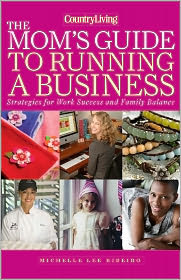
Country Living The Mom's Guide to Running a Business: Strategies for Work Success and Family Balance by Michelle Lee Ribero

This book takes the best business profiles from Country Living Magazine and expands on them. These women talk about how they manage home and family while creating their special work spaces and pursuing their entrepreneurial dreams.


Do You!: 12 Laws to Access the Power in You to Achieve Happiness and Success by Russell Simmons and Chris Morrow

This hip hop mogulchanged music and fashion culture with his introduction of Phat Farm and Baby Phat clothing lines. A faithful yoga practitioner, vegetarian and savvy businessman, Simmons talks about creating your company in no one’s image but your own.


Brewing Up A Business: Adventures in Beer from the Founder of Dogfish Head Craft Brewery, Sam Calagione

I read this book in a day. I’d visited the Dogfish Head Brewery in Delaware while on vacation but had no idea of its meager beginnings. From Calagione’s start in his basement making tiny batches of artisan beer for friends to the hysterical mishaps as he’s trying to deliver his product to distributors, it reminds me a lot of myself trying to get my own business off the ground. He has sage and useful advice on building a community around your product.


EntreLeadership: 20 Years of Practical Business Wisdom from the Trenches by Dave Ramsey

We’re recommending this one and it doesn’t hit the book stores until September 2011. Personal finance guru has become a staple in our household. His no-nonsense, no debt philosophy resonates with millions of devoted fans. His book, Financial Peace, and his financial sobriety program Financial Peace University preaches personal fiscal responsibility amid out-of-control consumerism. No doubt his newest work, Entreleadership will give the same tough love to business owners.


Craft Entrepreneur News and Information